What Are the Different Types of Fire Extinguisher?
There are six main types of fire extinguisher used in UK workplaces and buildings. Each one is designed to tackle different kinds of fire, so choosing the right one matters. Using the wrong extinguisher can make a fire worse or put the person using it at risk.
Water extinguishers
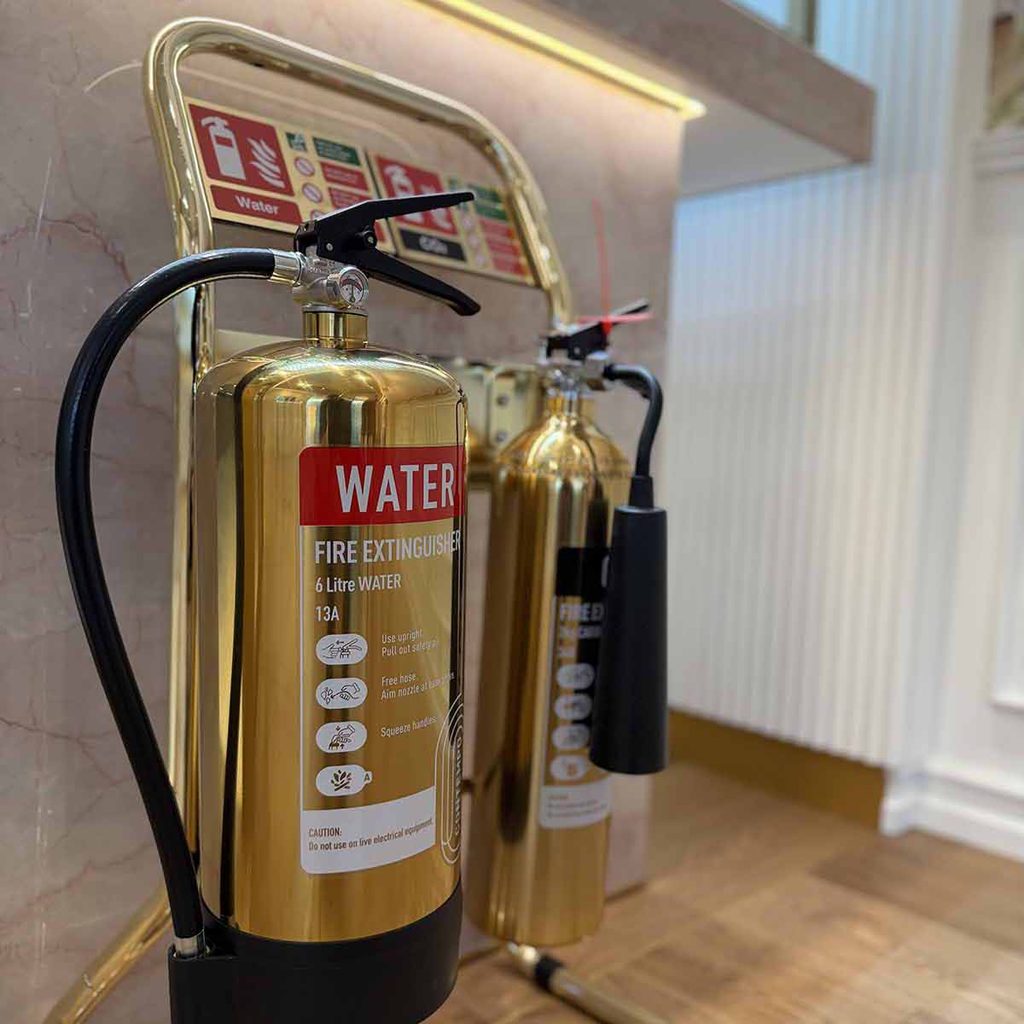
Water extinguishers are the most common type. They work by cooling the burning material and are used on fires involving solid materials such as wood, paper, textiles and cardboard. They must never be used on electrical equipment or burning fats and oils.
Water mist extinguishers
Water mist extinguishers release a very fine spray that cools the fire and starves it of oxygen. They can be used on a wider range of fires than standard water extinguishers, and some models are tested for use near electrical equipment. Always check the label to see what each one is suitable for.
Foam extinguishers
Foam extinguishers smother the fire with a layer of foam, cutting off its oxygen supply. They’re used on solid materials and flammable liquids such as petrol, paint and solvents. They’re not recommended for electrical fires unless the label confirms they’ve been tested for it.
Dry powder extinguishers
Dry powder extinguishers knock down fires quickly and can be used on solids, flammable liquids, flammable gases and electrical equipment. They’re best suited to outdoor areas, garages and plant rooms, as the powder reduces visibility and can be harmful if breathed in within a small, enclosed space.
CO2 extinguishers
CO2 (carbon dioxide) extinguishers replace the oxygen around a fire with carbon dioxide. They’re the main choice for electrical fires and are also used on flammable liquids. Because they leave no residue, they’re ideal for offices, server rooms and areas with computers and electrical equipment.
Wet chemical extinguishers
Wet chemical extinguishers are designed for fires involving cooking oils and fats, such as a deep fat fryer fire. They create a soapy layer that seals the surface and cools the oil. They’re essential in commercial kitchens.
Fire Extinguisher Colours Explained
In the UK, all fire extinguishers have a red body, with a coloured band or label that shows the type. This system comes from the European standard BS EN 3, and it makes it quick to identify the right extinguisher in an emergency.
Red
water and water mist
Cream
foam
Blue
dry powder
Black
CO2
Yellow
wet chemical
Older extinguishers were sometimes painted entirely in their type colour. If you still have any of these on site, it’s a good sign your extinguishers are due for a review.
Classes of Fire and Which Extinguisher to Use
Fires are grouped into classes based on what’s burning. Knowing the class helps you choose the right extinguisher:
- Class A: solid materials such as wood, paper and fabric. Use water, water mist, foam or dry powder.
- Class B: flammable liquids such as petrol, paint and solvents. Use foam, dry powder or CO2.
- Class C: flammable gases such as propane and butane. Use dry powder, and only once the gas supply has been safely isolated.
- Class D: combustible metals such as magnesium and aluminium. Use specialist dry powder extinguishers.
- Class F: cooking oils and fats. Use wet chemical.
Electrical fires don’t have their own class in the UK, because electricity is a source of ignition rather than a fuel. Instead, extinguishers suitable for electrical equipment carry an electrical symbol on the label.
Which Fire Extinguisher for Electrical Fires?
For fires involving electrical equipment, a CO2 extinguisher is usually the best choice. It doesn’t conduct electricity, leaves no residue, and won’t damage sensitive equipment such as computers and servers. Dry powder extinguishers can also be used, although they leave a mess and aren’t ideal indoors.
Never use a water or standard foam extinguisher on an electrical fire, as water conducts electricity and could cause a serious electric shock. If it’s safe to do so, switch off the power at the consumer unit before tackling the fire.
The best protection, of course, is stopping electrical fires before they start. Regular electrical testing and inspection picks up faults such as damaged cables and poor connections, and thermal imaging surveys can spot overheating components before they become a hazard. Our story of a family who lost everything in an electrical fire shows why these checks matter.
Fire Extinguisher Requirements for Businesses
Under the Regulatory Reform (Fire Safety) Order 2005, the responsible person for a business or non-domestic building must provide suitable firefighting equipment. In most premises, that includes fire extinguishers.
The number, type and position of extinguishers should be based on your fire risk assessment and the hazards on site. BS 5306-8 gives guidance on selecting and positioning extinguishers. As a general guide, they should be:
- Suitable for the types of fire that could happen in each area
- Placed on escape routes, near exits and close to specific hazards
- Clearly visible, with signage where needed
- Easy to reach and not blocked by furniture or stock
Fire extinguishers work best as part of a wider fire safety system, alongside a fire alarm and emergency lighting.
How Often Should Fire Extinguishers Be Serviced?
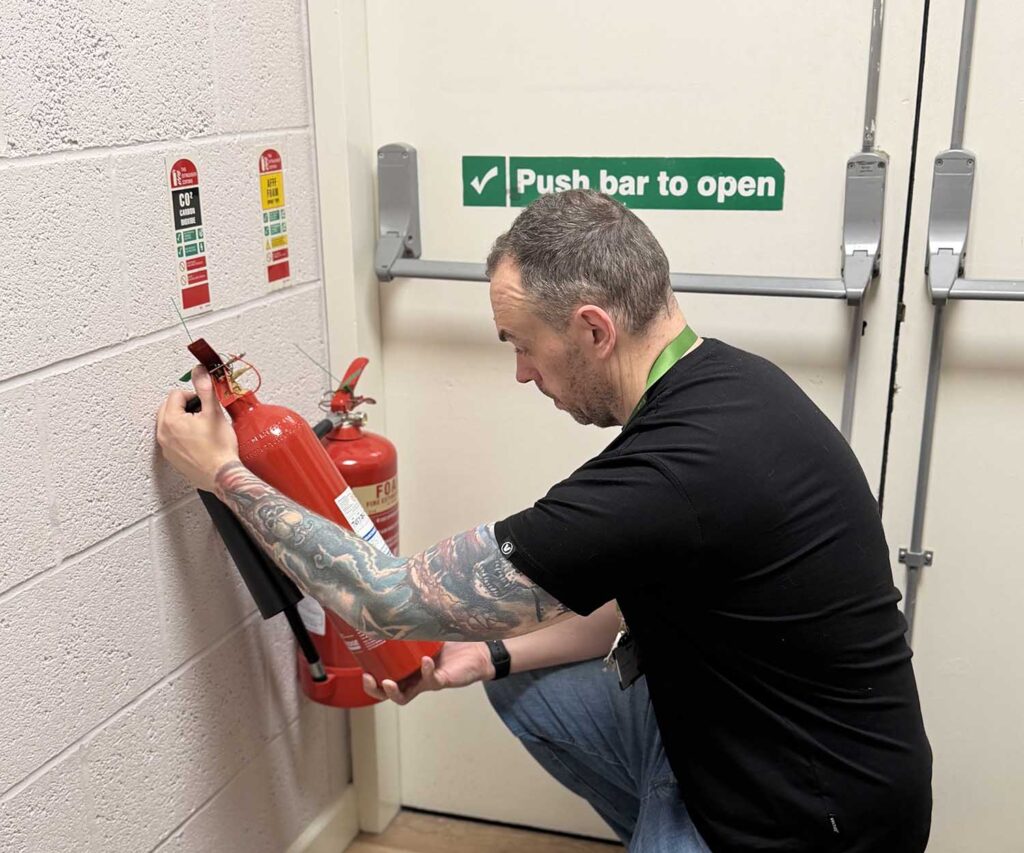
Fire extinguishers need regular checks to make sure they’ll work when needed. The testing frequency is set out in BS 5306-3:
Monthly
A quick visual check by someone on site, to confirm each extinguisher is in place, undamaged and showing the correct pressure
Annually
A basic service by a competent engineer, checking pressure, condition, signage and siting
Every 5 years
An extended service for water, foam, powder and wet chemical extinguishers, which includes a discharge test
Every 10 years
An overhaul for CO2 extinguishers, including a pressure test of the cylinder and a refill.
Each service should be recorded, and the extinguisher labelled with the date it was checked. This gives you a clear record to show your fire safety duties are being met.
You can read more about keeping other fire safety systems compliant in our guides on how often fire alarms should be tested and emergency lighting certificates.
How TES Compliance Can Help
TES Compliance provides annual inspection and servicing of all fire extinguisher types to BS 5306. Our engineers check pressure, condition, signage and siting, and provide full service records and certification for your files.
As part of our wider fire safety services, we also install and maintain fire alarm systems and emergency lighting for commercial and industrial premises across the UK. You can book a visit online.
Frequently Asked Questions
Everything you need to know about our electrical testing and compliance services, including costs, frequency, legal obligations and what to expect from your inspection.
What are the types of fire extinguisher?
The six main types of fire extinguisher are water, water mist, foam, dry powder, CO2 and wet chemical. Each is designed for different classes of fire.
Which fire extinguisher is used for electrical fires?
A CO2 extinguisher is usually the best choice for electrical fires, as it doesn’t conduct electricity and leaves no residue. Dry powder can also be used.
What do the colours on fire extinguishers mean?
All UK extinguishers have a red body with a coloured label showing the type: red for water, cream for foam, blue for dry powder, black for CO2 and yellow for wet chemical.
How often should fire extinguishers be serviced?
Fire extinguishers should have a visual check every month and a basic service by a competent engineer every year, in line with BS 5306-3. Some types also need an extended service every 5 years.
Is it a legal requirement to have fire extinguishers?
Under the Regulatory Reform (Fire Safety) Order 2005, businesses must provide suitable firefighting equipment based on their fire risk assessment. In most premises, this includes fire extinguishers.