
How Much Does Rewiring a House Cost?
Instead of giving you a price that may not match your home, this guide shows you how rewiring costs are worked out. That way, you can understand any quote you get and spot one that does not add up.
The cost of a rewire comes down to a few main parts. Once you know them, you can work out a rough figure yourself.
How to calculate the cost of a rewire
Labour + Materials + Consumer unit + Testing and certification + Making good + Extras = Total cost
1. Labour
Work out how many days the job will take and how many electricians are needed. Then multiply by the day rate.
Days × number of electricians × day rate = labour cost
2. Materials
This covers cable, back boxes, sockets, switches, light fittings and fixings. The more points (sockets and lights) you have, the higher this will be. Count the points in each room to get an idea.
3. Consumer unit
Most rewires need a new consumer unit. The price depends on how many circuits your home has and the protection it needs. It is also worth planning for the future, as a unit with spare ways lets you add circuits later without replacing it again.
4. Testing and certification
Every rewire must be tested. You should get an Electrical Installation Certificate (EIC) at the end.
5. Making good
Filling the channels cut into walls and ceilings. Some electricians include this. Others leave it for a plasterer.
6. Extras
Extra sockets, outdoor power, smoke alarms, EV charger circuits or surge protection.
Rewiring by property size
| Property type | Typical time | Price points | What affects the cost |
|---|---|---|---|
| 1-bed flat | 2 to 4 days | Low | Fewer circuits, simple access |
| 2-bed house | 4 to 6 days | Medium | Floor types, number of sockets |
| 3-bed house | 5 to 8 days | Medium to high | Loft and underfloor access, extras |
| 4-bed house | 7 to 10 days | High | More circuits, bigger layout |
| 5-bed or larger | 10+ days | Very high | Several floors, complex layout |
Use the “typical time” column with the labour formula above to get a starting point.
How to Make Sure You Get a Fair Price
A fair price is not always the cheapest one. Here is how to check a quote properly.
Get at least three quotes.
This shows you the normal range for your home.
Ask for an itemised quote.
Labour, materials and the consumer unit should be listed separately.
Compare like for like.
Check that each quote covers the same number of sockets, lights and circuits.
Check what is not included.
Plastering, decorating and waste removal are often left out.
Check the electrician is registered.
Use an NICEIC or NAPIT registered electrician. They can self-certify the work under Building Regulations.
Make sure certificates are included.
You should get an EIC and a Building Regulations compliance certificate.
Be careful with very low quotes.
They may skip testing, use cheap parts or add costs later.
Agree payment terms.
Avoid paying the full amount upfront. Stage payments are normal.
Ask about VAT.
Check if the price includes VAT or not.
How Long Does a House Rewire Take?
Most house rewires take between one and two weeks. The work has two stages:
First fix
Floorboards are lifted, walls are channelled and new cables are run. This is the messiest part.
Second fix
Sockets, switches, lights and the consumer unit are fitted. The system is then tested and certified.
An empty home is quicker to rewire. If you stay in the house, expect some mess and short periods without power. Time matters because labour is usually the biggest part of the cost.
Signs Your House Needs Rewiring
Wiring does not last forever. Look out for:
- Flickering or dimming lights
- Burning smells near sockets or switches
- Scorch marks on sockets
- Fuses blowing or breakers tripping often
- An old fuse box with rewireable fuses
- Rubber, fabric or lead-covered cables
- Not enough sockets, leading to heavy use of extension leads
- Warm or buzzing sockets and switches
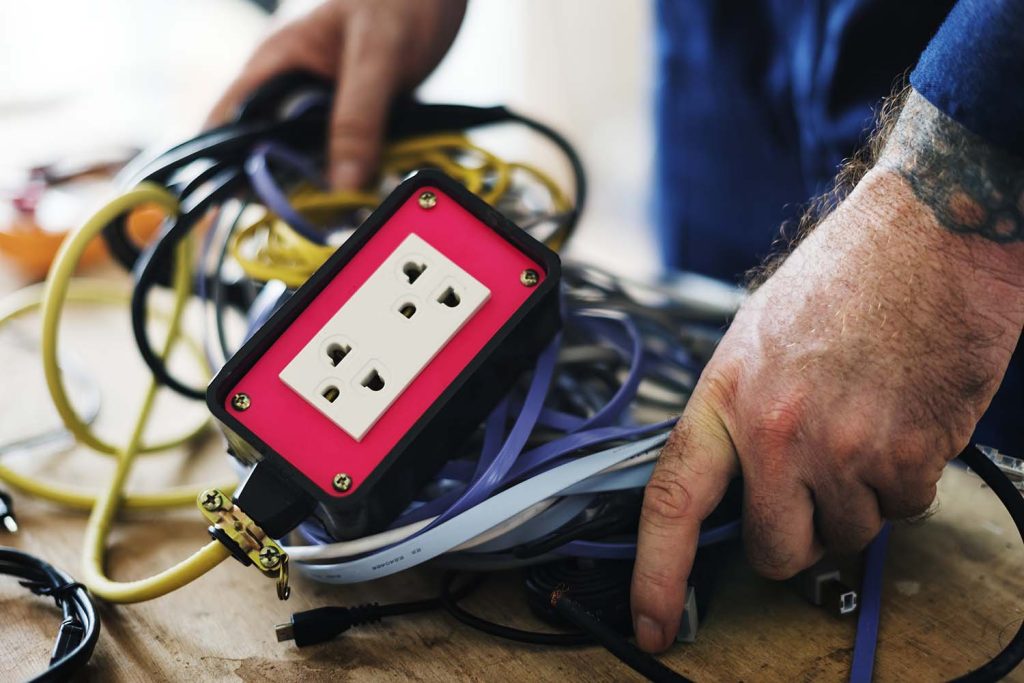
Faulty wiring can cause fires. Read how one family lost everything in an electrical fire. If you notice any of these signs, stop using the circuit and book an inspection.
Do I Need to Rewire My House?
Not every older home needs a full rewire. The best way to find out is with an Electrical Installation Condition Report (EICR).
An EICR checks your wiring, sockets, consumer unit and circuits. The report shows any dangers, issues that may become dangerous, and recommended improvements. You can learn more in our guide: What is an Electrical Installation Condition Report?
An EICR also helps you get a fair price. When every electrician quotes from the same report, it is much easier to compare quotes.
You may also need a rewire if you are planning a new kitchen, loft conversion or extension. Doing the wiring at the same time saves money and mess.
Consumer Unit Upgrade Cost
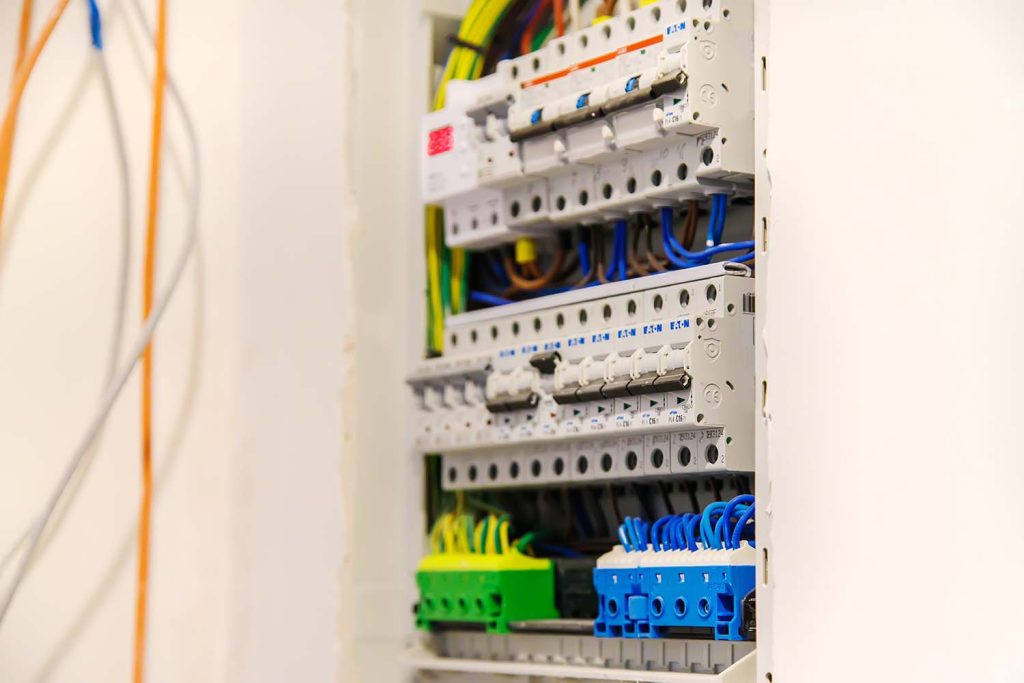
Your consumer unit controls the electricity in your home. Older units do not have modern safety features.
A new consumer unit should include:
- RCD protection to cut power if there is a fault
- Circuit breakers instead of old fuses
- Surge protection to protect your devices
- A metal case to meet current safety rules
To work out the cost of a consumer unit upgrade, look at:
- Number of circuits. More circuits means a larger unit.
- Type of protection. RCBOs cost more than a standard split-load unit but give better protection.
- Labour. Most upgrades take around half a day to a full day.
- Testing. Every circuit must be tested before it is signed off.
- Faults found. If testing finds problems, they must be fixed first.
If you are having a full rewire, the consumer unit is usually part of the quote. If your wiring is in good condition, you may only need the unit replaced.
Frequently Asked Questions
Why do rewiring quotes vary so much?
Electricians price labour, materials and extras differently. Some include plastering and some do not. An itemised quote helps you compare.
Can I live in my house during a rewire?
Yes, but expect mess and time without power. Some people move out during the first fix.
How often should a house be rewired?
Wiring usually lasts 25 to 30 years or more, depending on its type and condition.
Do I get a certificate after a rewire?
Yes. You should receive an EIC and a Building Regulations compliance certificate.
Can I rewire only part of my house?
Yes. A partial rewire is common if only some circuits are in poor condition.
Is an EICR the same as a rewire?
No. An EICR is an inspection. It tells you if a rewire or repairs are needed.
Get a Clear, Fair Rewiring Quote
TES Compliance is NICEIC approved and a member of the ECA. We carry out electrical installation work, including full and partial rewires, across the South of England.
Every quote we give is clear and itemised, so you know exactly what you are paying for. All work is fully tested and certified.