
What Is an EICR?
An EICR, or Electrical Installation Condition Report, is a formal report produced after a qualified electrician inspects and tests the fixed electrical installation in a property, meaning the wiring, consumer unit, sockets and switches, against the UK wiring standard, BS 7671 (also known as the IET Wiring Regulations).
It’s different from a PAT test. A PAT test checks the appliances people plug in, like kettles and laptops. An EICR checks the electrics built into the building itself. The report records the condition of the installation and flags anything that no longer meets current safety standards.
The inspection itself combines a visual check, looking for damage, wear, overloaded sockets and outdated or unsafe wiring, with a series of tests, including continuity, insulation resistance, and earth fault loop impedance, to see how the installation actually performs rather than just how it looks.
An EICR is typically carried out when a property is being rented out or sold, when it’s changing ownership or occupancy, at set intervals as part of routine safety checks, or after a fire, flood or major renovation that could have affected the wiring. Insurers sometimes ask for a valid, satisfactory EICR too, since an unsatisfactory report can affect a claim if faulty electrics were a contributing factor.
What Do the EICR Codes Mean?
Every issue found during the inspection is given a code, and the codes decide whether the report is satisfactory or unsatisfactory overall.
C1, Danger present.
There’s an immediate risk of injury. The electrician has to make this safe on the spot, and the report is marked unsatisfactory.
C2, Potentially dangerous.
Not an immediate danger, but it could become one if something else failed. This still makes the report unsatisfactory and needs urgent remedial work.
C3, Improvement recommended.
The installation doesn’t quite meet current standards but isn’t dangerous. This doesn’t fail the report on its own.
FI, Further investigation.
Something couldn’t be fully assessed during the inspection and needs a closer look. The report is marked unsatisfactory until this is resolved.
If a C1, C2 or FI shows up anywhere on the report, the whole EICR is unsatisfactory, even if everything else is fine.
How Often Do You Need an EICR?
How often you need one depends on the type of property, because different environments put different amounts of wear on the wiring.
| Property type | Recommended interval |
| Rented property (private sector) | At least every 5 years, or at the change of tenancy if sooner, this is a legal requirement in England |
| Owner-occupied home | Every 10 years is recommended (not a legal requirement) |
| Commercial offices and shops | Every 5 years |
| Industrial premises | Every 3 years |
| HMOs | Every 5 years by law, though some local authority licences require 3 years |
| Swimming pools and caravan parks | Annually |
Rented properties in the private sector need an EICR at least every 5 years, or sooner if the tenancy changes. This is a legal requirement in England under the Electrical Safety Standards in the Private Rented Sector (England) Regulations 2020, and landlords must give tenants a copy of the report. If a C2 is found, there’s generally 28 days to get the remedial work done.
Owner-occupied homes aren’t legally required to have one at all, but 10 years is the commonly recommended interval, or sooner if the property is older or has never been checked.
Commercial offices and shops are recommended every 5 years, broadly in line with rented housing, since the electrical load and day-to-day usage is similar.
Industrial premises are recommended every 3 years, because the wiring is exposed to more mechanical wear, vibration, and sometimes chemical exposure than a typical office or home.
HMOs fall under the same 5-year legal minimum as other rented properties, though many local authorities set licence conditions that require checks every 3 years instead.
Swimming pools and caravan parks are recommended annually, because water, chlorine, and constant outdoor exposure wear down insulation and connections far faster than in a typical building.
How Long Does an EICR Take?
It depends on the size and condition of the property. As a rough guide, a small flat takes around 1 to 2 hours, a typical 3 to 4 bedroom house takes 2 to 3 hours, and larger or commercial properties can take 3 to 4 hours or more. Older installations, harder-to-reach sockets, and more complex circuits all add time.
Who Can Carry Out an EICR?
There’s no specific legal qualification required to inspect and test an electrical installation, but in practice it should always be done by a competent, qualified electrician. The industry benchmark is the Level 3 Award in the Inspection and Testing of Electrical Installations, often still referred to by its older City & Guilds course code, 2391, alongside a working knowledge of BS 7671, the Electricity at Work Regulations 1989, and the Health and Safety at Work Act 1974. This matters for more than peace of mind too. If a landlord uses someone unregistered or unqualified and something later goes wrong, they can be held liable.
Checking an EICR Certificate
There isn’t a single public database where you can look up an EICR the way you can check a Gas Safe registration. If you want to verify a certificate, the most reliable way is to go back to the electrician or company who issued it, or check they’re registered with a recognised competent person scheme such as NICEIC, NAPIT or the ECA, most of these schemes let you search their member directory online to confirm someone is who they say they are.
Contact us for your NICEIC approved Electrical Installation Condition Report
GET YOUR FREE QUOTE
Other Names for an EICR
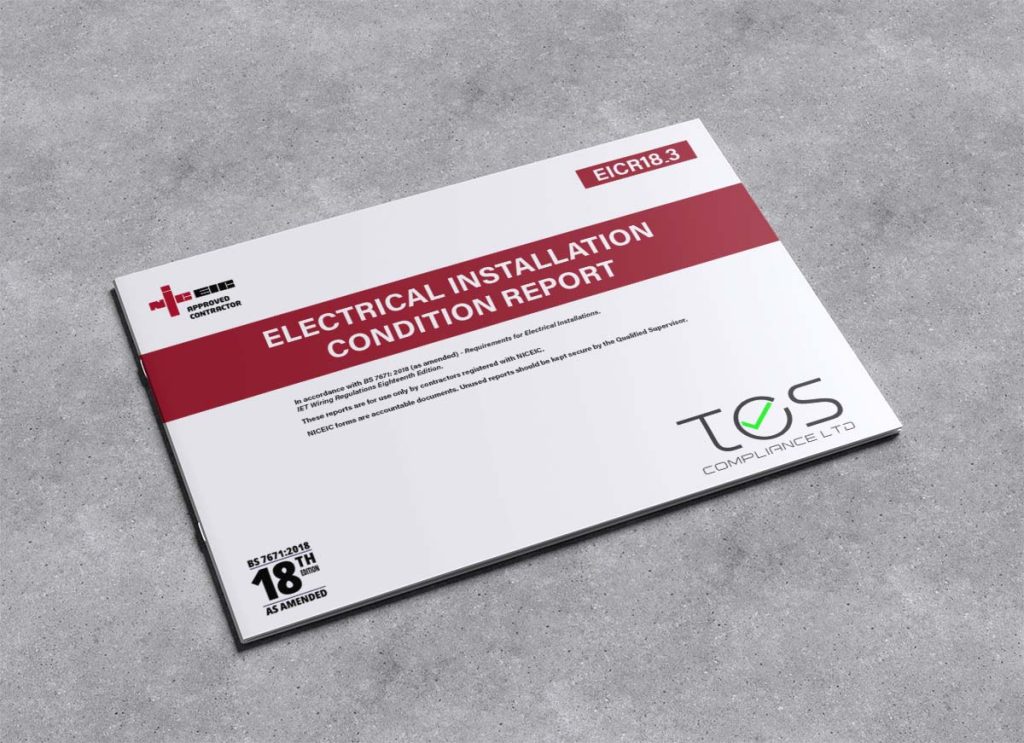
An EICR goes by a few other names depending on who you’re talking to. It’s sometimes called a Periodic Inspection Report (PIR), which was the term used before the current EICR format came in, and in the rental sector it’s often referred to informally as a Landlord Electrical Safety Certificate or simply an Electrical Safety Certificate. They all describe the same report.
You’ll also hear it called fixed wire testing, particularly in commercial and industrial settings, though this isn’t quite the same thing. Fixed wire testing is the inspection and testing process itself, and the EICR is the report that process produces. In everyday conversation, people tend to use the two interchangeably, but strictly speaking, one’s the activity and the other’s the paperwork.