
Emergency lighting is a legal requirement in all commercial and public buildings, providing safe evacuation routes in the event of a power failure. TES Compliance delivers full inspections, duration testing and ongoing maintenance of emergency lighting systems to BS5266, ensuring your escape routes and exit signage remain fully operational and compliant at all times.























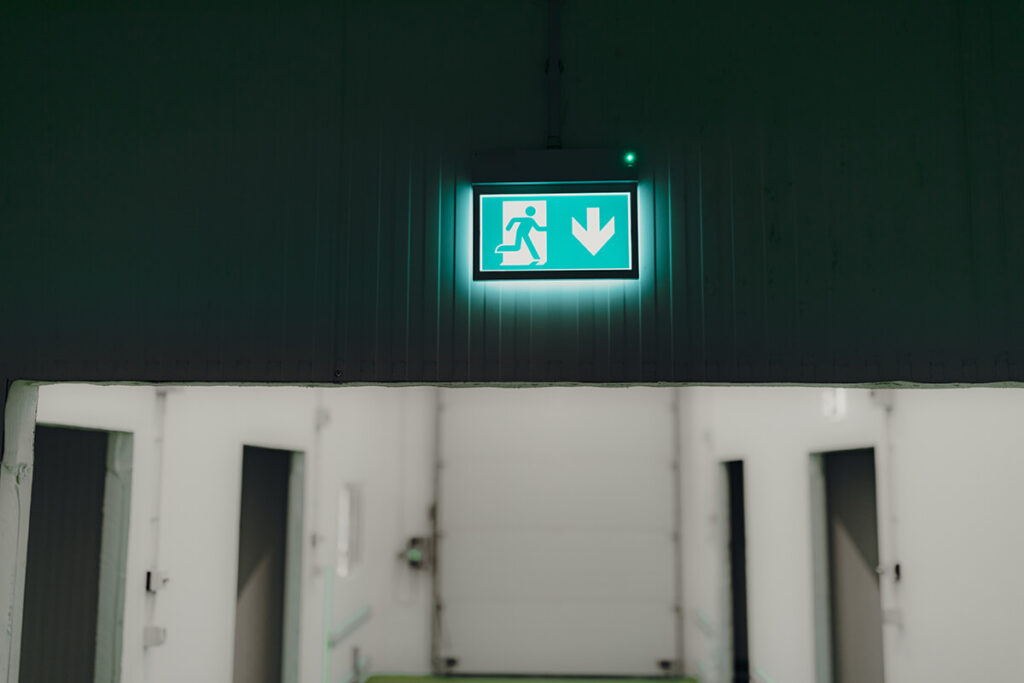
Our qualified engineers attend your premises at a pre-agreed time, carrying out a comprehensive inspection and test of your entire emergency lighting system in full accordance with BS5266, the British Standard governing the design, installation and maintenance of emergency lighting in non-domestic premises. Every fitting, escape route luminaire, exit sign and maintained or non maintained emergency lighting unit is examined, tested and formally documented throughout the inspection.
Testing emergency lighting to BS5266 involves both a visual inspection of every fitting and a full three-hour duration discharge test to verify that every unit illuminates correctly and remains operational for the required period in the event of a mains power failure. Every result is recorded in your emergency lighting log book, providing a complete and auditable compliance record for your premises. On completion you receive full written documentation confirming the condition of your system, any faults identified and all remedial actions required, giving you clear evidence that your installation meets all relevant emergency lighting regulations and legislative obligations.
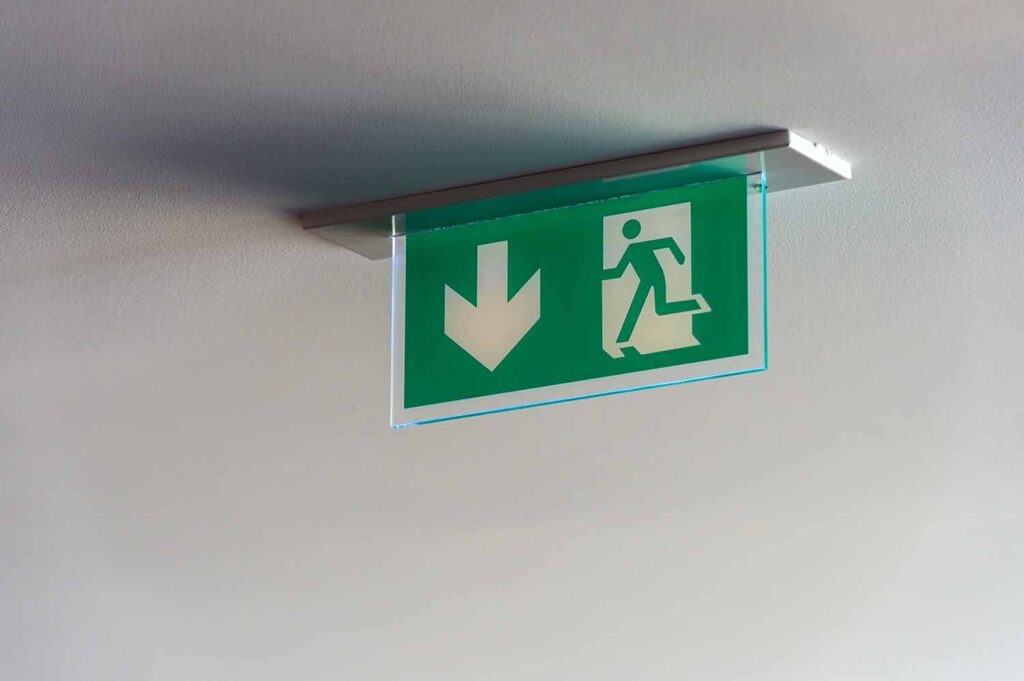
From initial design through to final certification, TES Compliance delivers complete emergency lighting solutions for new installations and system upgrades across all premises types.
Our fully trained emergency lighting engineers are experienced in the design, supply and installation of emergency lighting systems to BS5266 across all commercially occupied building types. Every new emergency lighting installation begins with a thorough assessment of your premises, taking into account how your building is used, the activities of its occupants, the layout of escape routes and the specific requirements of BS5266 and associated fire safety legislation. We then design a system that provides adequate illumination across all required locations, from escape routes and stairwells through to fire alarm call points, extinguisher locations and plant rooms.
Whether you require a maintained or non maintained emergency lighting system, a full new installation or an upgrade of an existing system, TES Compliance supplies and installs commercial grade fittings specified for your environment and formally certifies every installation on completion. From the moment your system is installed, our ongoing inspection and maintenance service ensures it remains fully operational and compliant throughout its operational life.
All emergency lighting inspections are carried out in full accordance with BS5266, the current British Standard governing emergency lighting regulations. Your report is legally recognised and accepted by insurers, fire authorities and building management teams.
Our engineers carry out a complete three-hour battery discharge test on every unit, verifying that your emergency lighting installation will perform as required in the event of a mains power failure. Every result is formally recorded in your log book.
Whether your installation consists of maintained or non maintained emergency lighting units, our engineers are experienced across both system types and all fitting configurations, ensuring every unit is correctly tested and documented.
Every inspection and test result is recorded in your emergency lighting log book, providing a complete and auditable compliance record for insurers, fire officers and local authorities who may request evidence of your testing history.
TES Compliance offers ongoing emergency lights service contracts covering all scheduled inspection visits, monthly functional checks and remedial works. One contract, complete peace of mind throughout the year.
TES Compliance provides emergency lighting servicing across the entire United Kingdom, with flexible scheduling to suit your operational requirements and rapid turnaround on remedial works where needed.
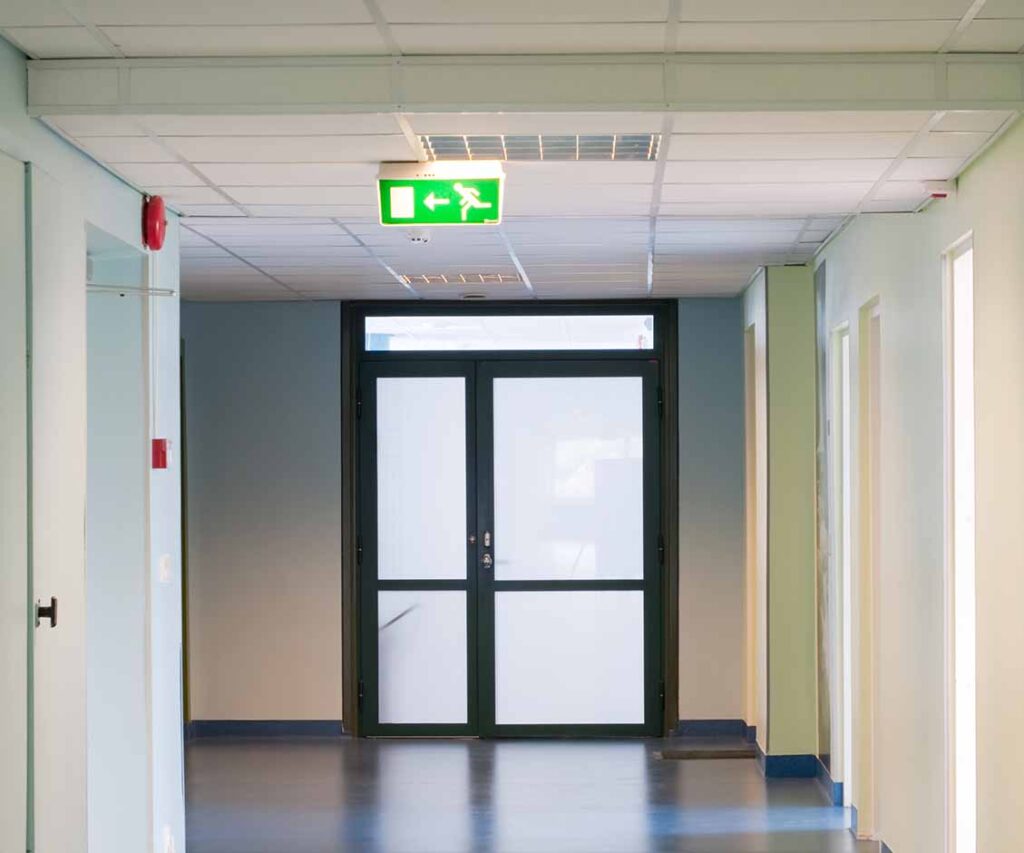
Emergency lighting is a system designed to provide temporary illumination automatically in the event of a mains power failure, ensuring that all building occupants can safely evacuate the premises via clearly identified escape routes. Unlike standard lighting, emergency lighting activates instantly when normal power is lost, whether as a result of a fire, flood or routine power cut, illuminating escape routes, stairwells, exit signage and fire safety equipment locations to enable a calm and safe evacuation of all occupants including those unfamiliar with the building layout.
Emergency lighting regulations in the UK require that almost all commercially occupied buildings are equipped with a functional and well maintained emergency lighting installation. The primary standard governing these requirements is BS5266, the British Standard for emergency lighting, which sets out where emergency lighting must be installed, how it must be tested and how frequently inspections must take place. As a minimum, emergency lighting is required at all escape routes, fire exits, stairwells, changes in floor level, fire alarm call points, fire extinguisher locations, fire alarm control panels, plant and switch rooms and any high risk task areas within the building.
There are two principal types of emergency lighting installation. Maintained emergency lighting units remain illuminated at all times, functioning as both standard and emergency lighting simultaneously. Non maintained emergency lighting units remain dormant under normal conditions and activate only when mains power is lost. The appropriate system for your premises will depend on how your building is used, the activities of its occupants and the relevant requirements of BS5266 and associated fire safety legislation.
Any commercially occupied building has a legal obligation to maintain a functional emergency lighting system. Regular emergency lighting servicing ensures your installation remains compliant and your staff and visitors are protected at all times.
High-occupancy buildings with a responsibility for the safety of students and staff require a fully maintained and regularly tested emergency lighting installation. TES Compliance supports educational facilities with scheduled inspection and maintenance programmes.
Hospitals, care homes and healthcare premises carry the highest duty of care for their occupants. BS5266 compliant emergency lighting inspections and documented certification are essential for CQC compliance and insurance purposes.
Guest-facing premises frequently accommodate visitors unfamiliar with the building layout. A fully operational and regularly tested emergency lighting system is a fundamental legal and insurance requirement for all hospitality venues.
Large-scale industrial premises with complex layouts and high-risk task areas require a structured emergency lighting inspection and maintenance programme to remain compliant with current emergency lighting regulations.
Responsible for multiple properties? TES Compliance can manage a rolling emergency lighting servicing programme across your entire portfolio, ensuring every site remains fully tested, documented and compliant at all times.
No obligation · Fast response
Emergency lighting regulations in the UK are governed primarily by BS5266, the British Standard for emergency lighting, alongside the Regulatory Reform (Fire Safety) Order 2005 which requires the responsible person for any non-domestic premises to ensure that escape routes are adequately illuminated at all times. Together these regulations require that all commercially occupied buildings are equipped with a functional emergency lighting installation that is regularly inspected, tested and documented by a qualified engineer.
Testing emergency lighting involves two levels of obligation. A functional emergency lighting check should be carried out every month by a competent member of staff, verifying that every unit activates correctly and recording the result in the emergency lighting log book. A full formal inspection including a complete three-hour duration discharge test must be carried out annually by a qualified engineer in accordance with BS5266. Any faults identified during either level of testing should be rectified as soon as possible.
Maintained emergency lighting units remain illuminated at all times, operating as both standard and emergency lighting simultaneously. Non maintained emergency lighting units remain dormant under normal conditions and activate automatically only when mains power is lost. The appropriate system for your premises depends on how your building is used and the requirements of BS5266. TES Compliance engineers can advise on the most suitable solution for your specific installation and occupancy type.
While annual formal testing is not explicitly stated as a legal requirement in a single piece of legislation, having a fully functional emergency lighting system most certainly is. Insurance companies and fire officers will routinely require evidence that the responsible person has taken all necessary steps to ensure the system is operational and compliant with BS5266 and associated fire safety legislation. A documented annual inspection carried out by a qualified engineer provides that evidence and protects you as the duty holder in the event of an incident.
A formal emergency lighting inspection carried out by TES Compliance covers a thorough visual examination of every fitting, escape route luminaire and exit sign throughout your premises, followed by a full three-hour battery duration discharge test on every unit. Every result is recorded in your emergency lighting log book and on completion you receive full written documentation confirming the condition of your system, any faults identified and all remedial actions required. This provides a complete and auditable compliance record accepted by insurers, fire officers and local authorities.
Don’t leave compliance to chance. Our fully qualified engineers are ready to assess, certify and protect your property, whether commercial or domestic. With coverage across the entire UK.
No obligation · Fast response