
Keeping your workplace safe, compliant and fully documented. TES Compliance delivers professional portable appliance testing across all sectors, carried out by qualified engineers with minimal disruption to your operations.























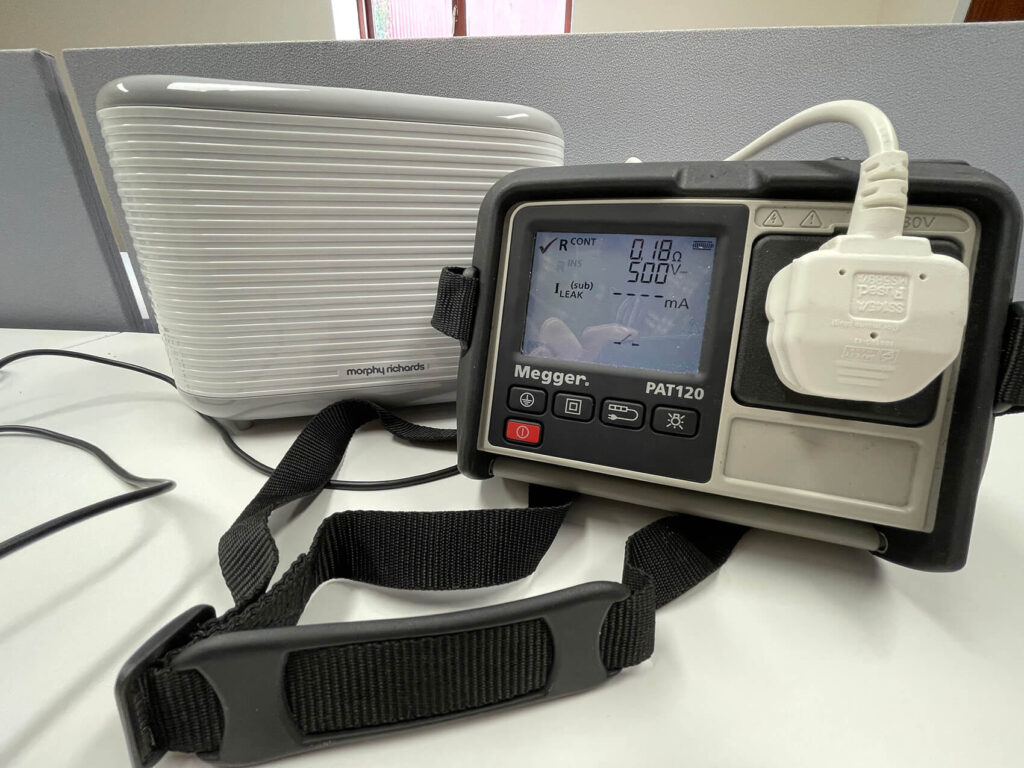
Our qualified engineers arrive at your premises at a pre-agreed time, equipped to test every portable appliance efficiently and with minimal disruption to your working day. Electrical Equipment Testing (EET), formerly known as Portable Appliance Testing (PAT), involves two stages. First, a thorough visual inspection of each appliance, its cable and plug for any signs of damage, wear or deterioration. Second, a formal electrical test using calibrated equipment to verify that every item meets the required safety standard.
Every appliance tested receives a clear pass or fail label, and every item is logged within a full digital asset register, recording the appliance type, location, test result and date. From PAT testing laptop chargers and IEC leads to computer equipment and large fixed appliances, our engineers work systematically through your entire inventory. On completion you receive a fully documented electrical equipment testing report, valid for submission to insurers, health and safety auditors and facilities managers.
Our engineers are fully qualified and experienced in electrical safety pat testing across all appliance types and sectors. Every test is carried out to the current IET Code of Practice standard.
Every item tested is logged in a detailed digital asset register recording appliance type, location, test result and date. A complete, auditable record of your entire electrical equipment inventory.
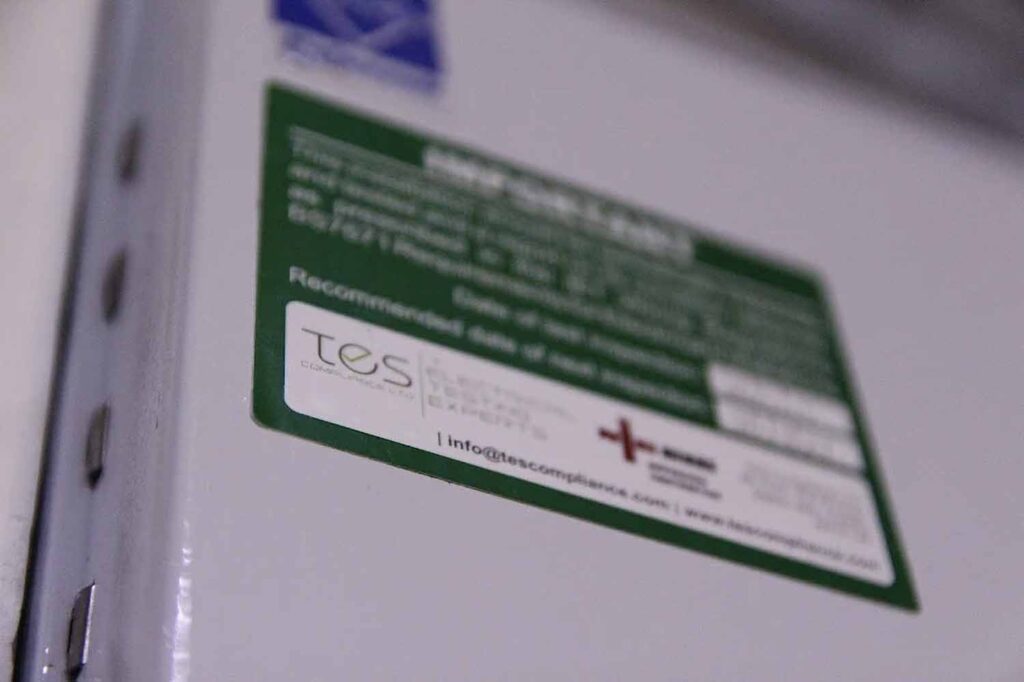
Every appliance receives a clear pass or fail label upon completion. At a glance, your staff and safety auditors can confirm the status of any piece of equipment in your premises.
From PAT testing laptop chargers and IEC leads to computer equipment and kitchen appliances, our engineers test every portable appliance regardless of type, size or sector.
We work efficiently and methodically around your schedule. Whether you operate an office, school, healthcare facility or hotel, our engineers complete your electrical equipment testing across your premises with the least possible interruption.
TES Compliance provides electrical equipment testing (UK PAT Testing services) across the entire United Kingdom. Whether you need a one-off visit or a scheduled annual programme, we offer flexible arrangements to suit your requirements.
Electrical Equipment Testing (EET), formerly known as Portable Appliance Testing (PAT), is a structured process of inspecting and electrically testing any appliance connected to the mains via a plug. What is a PAT test? It is a two-stage assessment combining a thorough visual inspection of the appliance, cable and plug with a formal electrical test using calibrated equipment, verifying earth continuity, insulation resistance and lead polarity where applicable. Every item is labelled with a clear pass or fail result and logged within a full digital asset register. Electrical equipment testing of this kind provides a complete, auditable record accepted by insurers, health and safety auditors and facilities managers, and should be carried out at intervals determined by the type of equipment, its environment and the level of risk involved.
Any business with portable electrical equipment has a legal duty of care under the Health and Safety at Work Act 1974. Electrical equipment testing in offices and commercial premises demonstrates compliance and protects your staff.
Schools, colleges and healthcare facilities handle high volumes of electrical equipment across multiple users. PAT testing and EET programmes ensure every appliance is safe and accounted for.
Guest-facing electrical equipment carries significant liability. A documented electrical equipment testing programme protects your business, satisfies insurers and demonstrates a commitment to electrical safety at every level.
Mobile PAT testing is one of the most common requirements in the events and production industry. TES Compliance provides on-site EET for temporary installations, production equipment and event venues nationwide.
No obligation · Fast response
PAT testing stands for Portable Appliance Testing. It is a formal process of visually inspecting and electrically testing any appliance that connects to the mains via a plug. PAT test stands for the same thing regardless of sector or appliance type, and the process is governed by the IET Code of Practice for In-Service Inspection and Testing of Electrical Equipment. At TES Compliance, we now refer to this service as Electrical Equipment Testing (EET), a broader and more accurate term that covers both portable and fixed electrical equipment across your premises. The process, standards and legal obligations remain the same.
The term Portable Appliance Testing or PAT testing has traditionally been associated with portable appliances only. Electrical Equipment Testing (EET) is a broader and more accurate term that reflects the full scope of what is tested, covering both portable and fixed electrical equipment across your premises. The process, standards and legal obligations remain exactly the same.
While there is no single legally mandated qualification specific to electrical equipment testing, the person carrying out the tests must be competent to do so. A qualified electrician with the appropriate training and calibrated test equipment is considered competent, but it is strongly recommended to use a specialist electrical equipment testing electrician who carries professional indemnity insurance and issues formal, documented certification.
How long does PAT testing or electrical equipment testing take depends on the number of appliances, the size of the premises and the type of equipment involved. A small office with twenty to thirty items may take as little as a couple of hours, while a large commercial premises with hundreds of appliances across multiple floors will naturally require longer. TES Compliance works efficiently to minimise disruption throughout.
How long does a PAT test or electrical equipment test last is determined by the type of equipment and the environment in which it is used rather than a fixed legal interval. The IET Code of Practice recommends a risk-based approach to testing frequency. Low-risk office equipment may remain valid for up to four years, while high-risk or heavily used equipment may require annual or more frequent testing. Your engineer will advise on the most appropriate EET frequency for your sector.
New appliances from a reputable manufacturer are generally considered safe at the point of purchase and do not require immediate formal electrical testing. However, a visual inspection before first use is always recommended and new equipment should be added to your ongoing electrical equipment testing programme to ensure it is formally assessed at the appropriate interval.
Don’t leave compliance to chance. Our fully qualified engineers are ready to assess, certify and protect your property, whether commercial or domestic. With coverage across the entire UK.
No obligation · Fast response